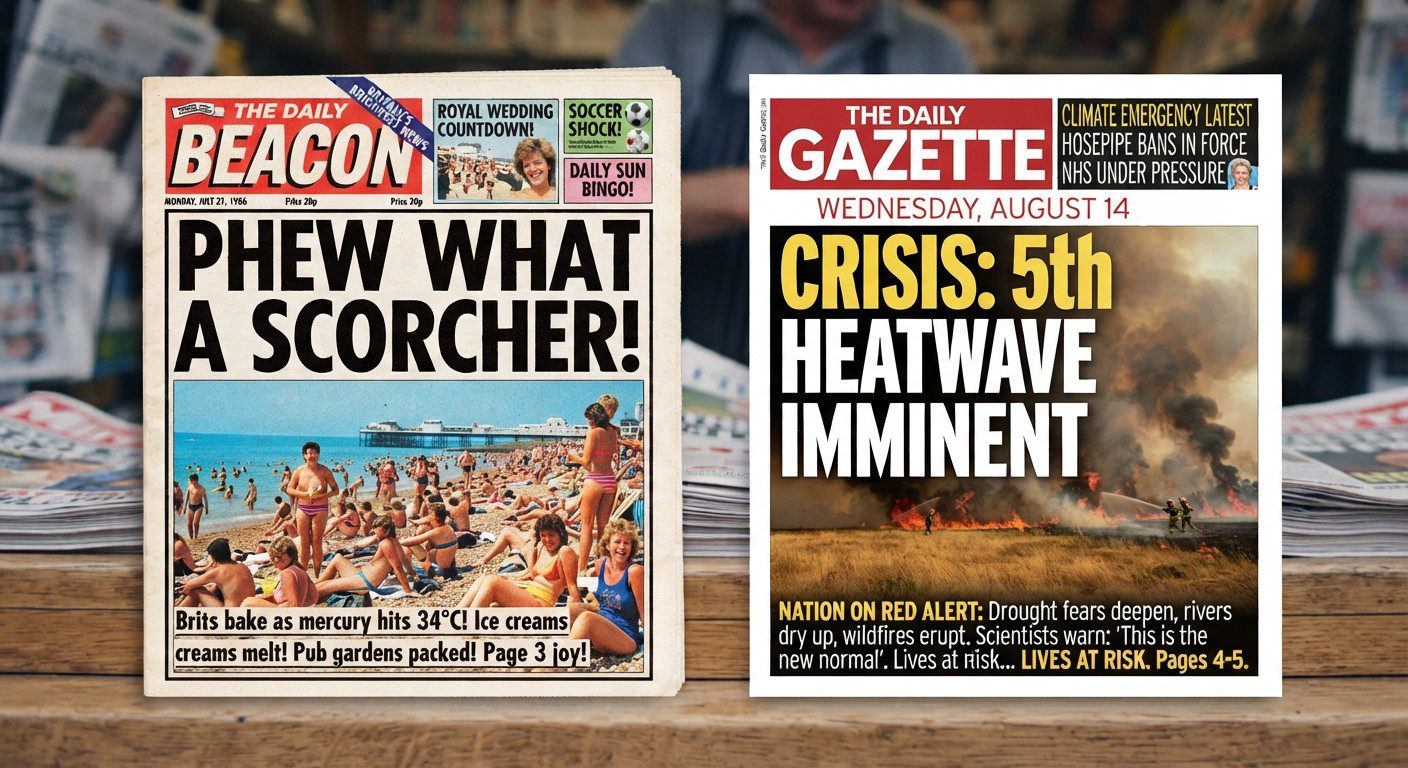
The way people in England talk about the weather has undergone a profound shift over the last few decades. If you grew up in the North West, you will remember when the sky was a permanent focus of stoic humour. Rain was not a crisis; it was simply the background noise of life. A dry spell or a genuinely hot summer day was treated as a collective windfall. It was a rare lottery win gifted by the meteorology gods that demanded immediate action. People would rush out into gardens, and throw open pub beer gardens with a sense of giddy disbelief. It was a welcome anomaly. It was something to be cherished before normal service resumed and the grey drizzle settled back over the hills.
Today, that breezy optimism has largely evaporated. While the British obsession with the forecast remains as strong as ever, the tone of the conversation has darkened. When temperatures climb unseasonably high, the response is no longer just cheerful relief or grumbling annoyance. It is marked by a low-level, pervasive anxiety. We look at a prolonged heatwave not as a lucky break or an ordinary inconvenience, but as a symptom of a shifting climate. The North West, once defined by its temperate identity, is beginning to feel the edges of an uneasy new reality.
The Days of Stoic Humour and Rare Sunshine
To understand this change, we have to look back at how weather used to function in the cultural life of the region. For generations, the weather was a great leveller and a reliable source of banter. Phrases like ‘there is no such thing as bad weather, only the wrong clothing’ were trotted out with pride. When a rare heatwave arrived in July or August, it transformed the mood of entire towns. Office workers would eat sandwiches on park benches, turning their faces desperately towards the sun as if trying to store up Vitamin D for the long winter ahead. The warm weather was special precisely because it was fleeting. It belonged to the realm of luck. You did not expect it, so when it happened, you felt uniquely fortunate to be alive to witness it.
In those days, talking about the weather was a social lubricant. It was safe, predictable, and delightfully mundane. You could complain about the drizzle at a bus stop in Preston knowing you shared a common, localized experience. The seasons had a reassuring rhythm, even if that rhythm frequently involved carrying an umbrella in June.
A Stuttering Rhythm and a New Vocabulary
Over the past ten to fifteen years, however, that familiar rhythm has begun to stutter. The anomalies are becoming the new baseline, and people have noticed. Winters have grown noticeably milder and wetter, while summers arrive with an aggressive intensity that feels entirely out of character for the region. We now experience prolonged periods where the ground bakes dry, followed by violent, localized downpours that overwhelm drainage systems.
This physical transformation has completely changed our vocabulary. The language of weather is no longer just about comfort or inconvenience; it is now the language of climate change. In casual conversations across the North West, people frequently drop terms that were once confined to scientific journals or news broadcasts. We talk about extreme weather events, hosepipe bans, and rising sea levels along our coastlines. When a drought hits in spring, gardeners and farmers no longer just shrug and hope for rain; they worry about reservoir levels in the Pennines and the long-term viability of their crops.
Dread in the Blue Skies and Melancholy Landscapes
Moreover, our emotional relationship with the sun has soured. That previous giddy excitement has been replaced by a cautious, sometimes fearful wariness. When the Met Office issues amber or red heat warnings, the advice is no longer just to slap on some suncream and enjoy the afternoon. It is about protecting vulnerable neighbours, keeping pets cool, and worrying about the urban heat island effect in our major conurbations. A brilliantly blue, cloudless sky in the middle of summer, which once signalled freedom and leisure, now often carries an undertone of dread. We wonder how long the drought will last, whether the moors are at risk of catching fire, and what kind of toll this unnatural heat is taking on the natural world around us.
This shift is particularly poignant in a region so deeply connected to its landscapes. People in the North West take immense pride in their environment, from the dramatic fells of the Lake District to the sweeping expanses of the Lancashire coast. As we watch ecosystems struggle to adapt, the conversation turns melancholic. Walkers and conservationists notice changes in flora and fauna, reporting altered migration patterns and stressed woodlands. The weather is no longer happening to us from a safe distance; it feels increasingly hostile.
Real-Time Vigilance and Reading the Writing on the Wall
Even the way we consume weather information has transformed. We used to check the local evening news or glance at the morning paper to see if we needed a coat. Now, most of us carry live radar maps in our pockets, tracking storm cells and temperature anomalies in real time. Our phones buzz with weather alerts, turning what used to be a casual topic of conversation into a source of constant, low-level vigilance. We are hyper-aware of every meteorological shift, scanning the horizon for signs of the next extreme event.
Ultimately, the way we talk about the weather in the North West mirrors a broader cultural realization. We have lost our innocence regarding the skies above us. The cheerful fatalism that once defined our attitude towards rain has given way to a sobering recognition of our vulnerability. While we still grumble about the drizzle and still appreciate a rare moment of genuine warmth, the subtext of our conversations has fundamentally changed. We are no longer just living through the weather of the day; we are trying to read the writing on the wall, acutely aware that our familiar climate of the past is slipping away.


