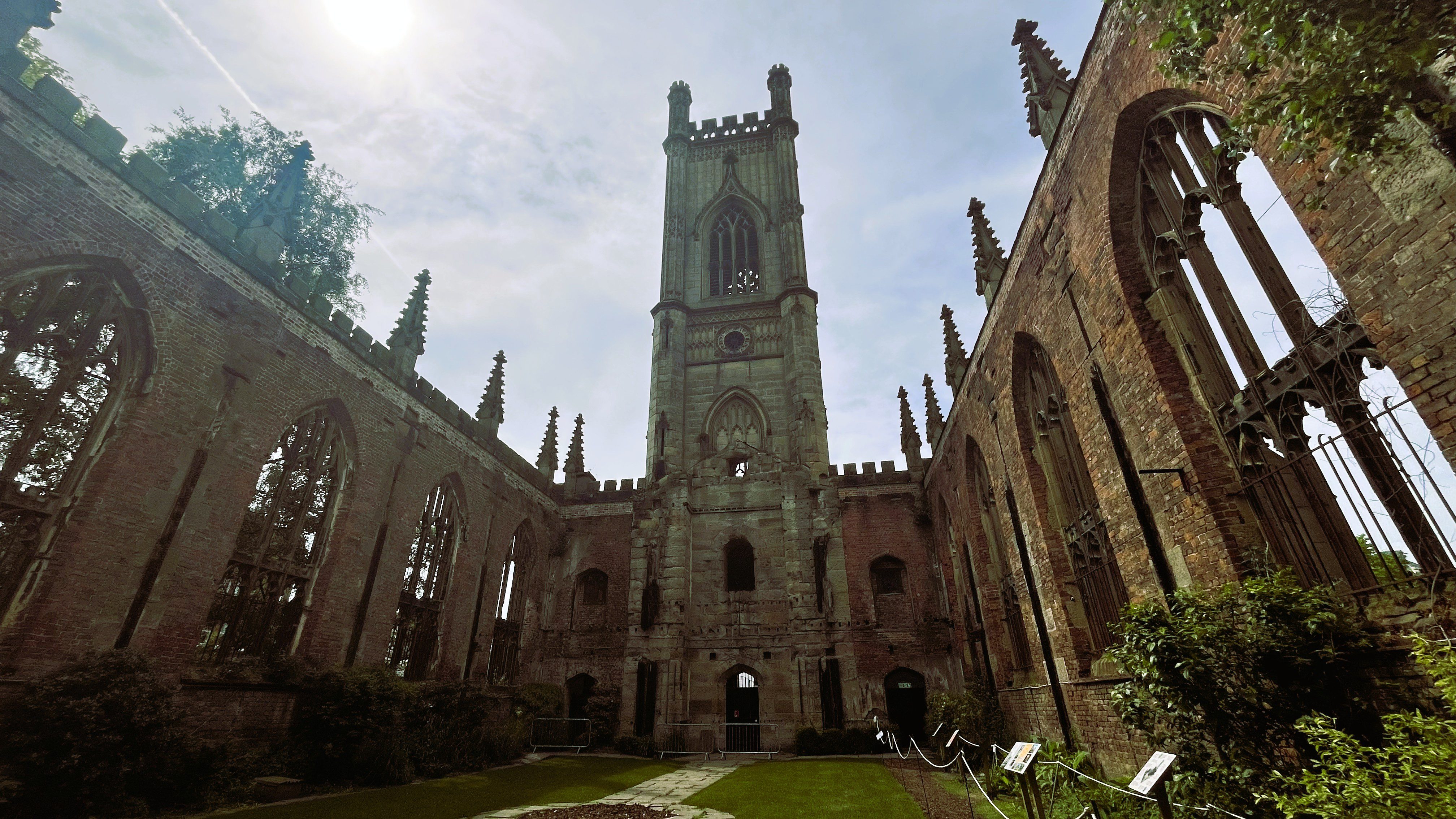
Liverpool is a city with a verrrry loooooong history and many famous landmarks. One of the most unusual and beautiful places to visit is St Luke’s Church. Most local people do not call it by its official name. Instead, they call it ‘the Bombed Out Church’. It stands at the top of Bold Street, a busy shopping area in the city centre. Today, the building has no roof, but it is still a very peaceful place to visit. It reminds us of the past while offering a space for modern cultural events.
At A Glance
| Location | Leece Street, Liverpool, Merseyside |
| Main Attraction | A historic roofless church from the nineteenth century |
| Key Historical Event | Destroyed by an incendiary bomb during the Second World War |
| Current Use | Community arts venue, garden bar, and war memorial |
| Best For | History lovers, photography, and peaceful reflection |
The Early Beginnings of St Luke’s Church

The story of this famous landmark began a long time ago in the late eighteenth century. In 1791, the Earl of Derby gave the land to the town of Liverpool. He made one strict condition for this gift. The land could only be used to build a holy place of worship. A famous surveyor named John Foster Senior started to design the building in 1802. However, workers did not lay the first foundation stone until April 1811. The construction process was very slow because of a legal dispute about nearby land.
Building work stopped for many years and did not start again until 1826. By this time, John Foster Senior was near the end of his life. He died in 1827 before workers could finish the beautiful building. His son, who was called John Foster Junior, took over the important role. He made several modern changes to the original plans, adding decorative cast-iron railings around the grounds. He also created a very special cast-iron bell frame inside the tall western tower. Experts believe this frame was the very first of its kind in the world.
The building was finally completed and consecrated in 1831, forty years after the land was given. It opened its doors to the public the following year. The building was designed in the Perpendicular Gothic Revival style, which was very popular at that time. It looked magnificent with its tall stone arches and large glass windows. The building also functioned as a concert hall for the public until 1849.
Life as the Famous Doctors’ Church
During the nineteenth century, the church became a very popular place for local residents. People gave it the friendly nickname of ‘the doctors’ church’. This was because the building was located very close to Rodney Street. Rodney Street was famous because it was the home of many leading medical professionals. Rich doctors and their families walked to the church every Sunday. They sat in a special area called the chancel, which John Foster Junior had enlarged.
The church served the local community for more than one hundred years. It welcomed thousands of people for regular Sunday services, beautiful weddings, and local funerals. The surrounding area grew into a bustling urban centre with many shops and businesses. Visitors loved the peaceful atmosphere inside the stone walls. The beautiful architecture offered a quiet space away from the noisy streets of Liverpool. The church remained a proud symbol of the city through many changing generations.
The Tragic Night the Bombs Fell

Everything changed for the building during the difficult years of the Second World War. Liverpool was an incredibly important port city for the U.K. war effort. Ships arrived at the River Mersey every week with vital food and supplies. Because of this, the German air force targeted the city with many intense air raids. The worst attacks happened in May 1941 during ‘the May Blitz’. For eight nights in a row, bombs fell across the city.
Just after midnight on 6 May 1941, an incendiary bomb struck the roof of St Luke’s. A huge blaze quickly spread through the wooden interior of the building. The fire was so strong that it burned for three full days. At exactly 3:36 in the morning, the heavy clock mechanism inside the tower stopped working. The intense heat caused several large bells to break and fall to the ground.

Miraculously, no-one died inside the building during this fire. However, the interior of the church was completely destroyed by the flames. When the smoke finally cleared, only the external stone walls remained standing. The roof was completely gone, leaving the inside open to the sky. The beautiful stained-glass windows were broken into thousands of pieces. The people of Liverpool were deeply saddened to see their beautiful landmark in ruins.
Decades of Silence and Natural Regeneration
After the war ended, the city had to make a big decision. Many people wanted to clear the rubble and rebuild the church. Others thought the ruins should be demolished to make space for new roads. Instead, the local government decided to leave the building exactly as it was. It became a official monument to commemorate the thousands of civilians who died in Liverpool. More than four thousand people lost their lives across Merseyside during the war.
For more than sixty years, the site was closed to the general public. The ruins became overgrown with green ivy, wild grass, and small trees. Nature slowly took over the empty space where people used to sit and pray. Birds made nests in the high stone arches where windows used to be. Although the gates were locked, the building remained a powerful landmark. People walking past could look through the railings and remember the history of their city.
A New Life as a Cultural Venue

The modern history of the building began in the early years of the twenty-first century. In 2007, a community arts group decided to clean the messy site. They removed the dangerous debris but kept the beautiful natural plants. The group reopened the historic space to the public as a managed ruin. It quickly became a very popular venue for unique cultural events in the city. People could finally walk inside the stone shell after decades of closure.
Between 2015 and 2017, the local government funded a major restoration project. Specialist workers repaired the old stonework to make the structure safe. They also added a new roof to the small vestry inside the south tower. Today, the site is run by a dedicated community organisation. It hosts regular craft markets, outdoor cinema nights, and live music performances. There is also a lovely outdoor garden bar where visitors can buy drinks.

Visitors can also see a statue called ‘Truce’. This sculpture was created by a local artist named Andy Edwards. It shows a British soldier and a German soldier shaking hands. It commemorates the famous Christmas Truce that happened in 1914 during the First World War. The statue stands in a pretty garden surrounded by flowers, reminding visitor of the importance of peace.
Useful Information
| Address | Leece Street, Liverpool, L1 2TR |
| Opening Hours | Friday 1pm to 7pm, Saturday and Sunday 12pm to 6pm |
| Entry Fee | Free entry, but a small donation is encouraged |
| Facilities | Outdoor garden bar, café, temporary toilets, and seating areas |
| Nearest Station | Liverpool Central Station is a five-minute walk away |
Final Thoughts
St Luke’s Bombed Out Church is a truly unique place to visit in Liverpool. It tells a moving story about survival, history, and community spirit. It has transformed from a place of destruction into a beautiful centre for art. If you are planning a day trip to Liverpool, you should definitely visit. It offers a wonderful opportunity to experience history while enjoying a peaceful moment.


