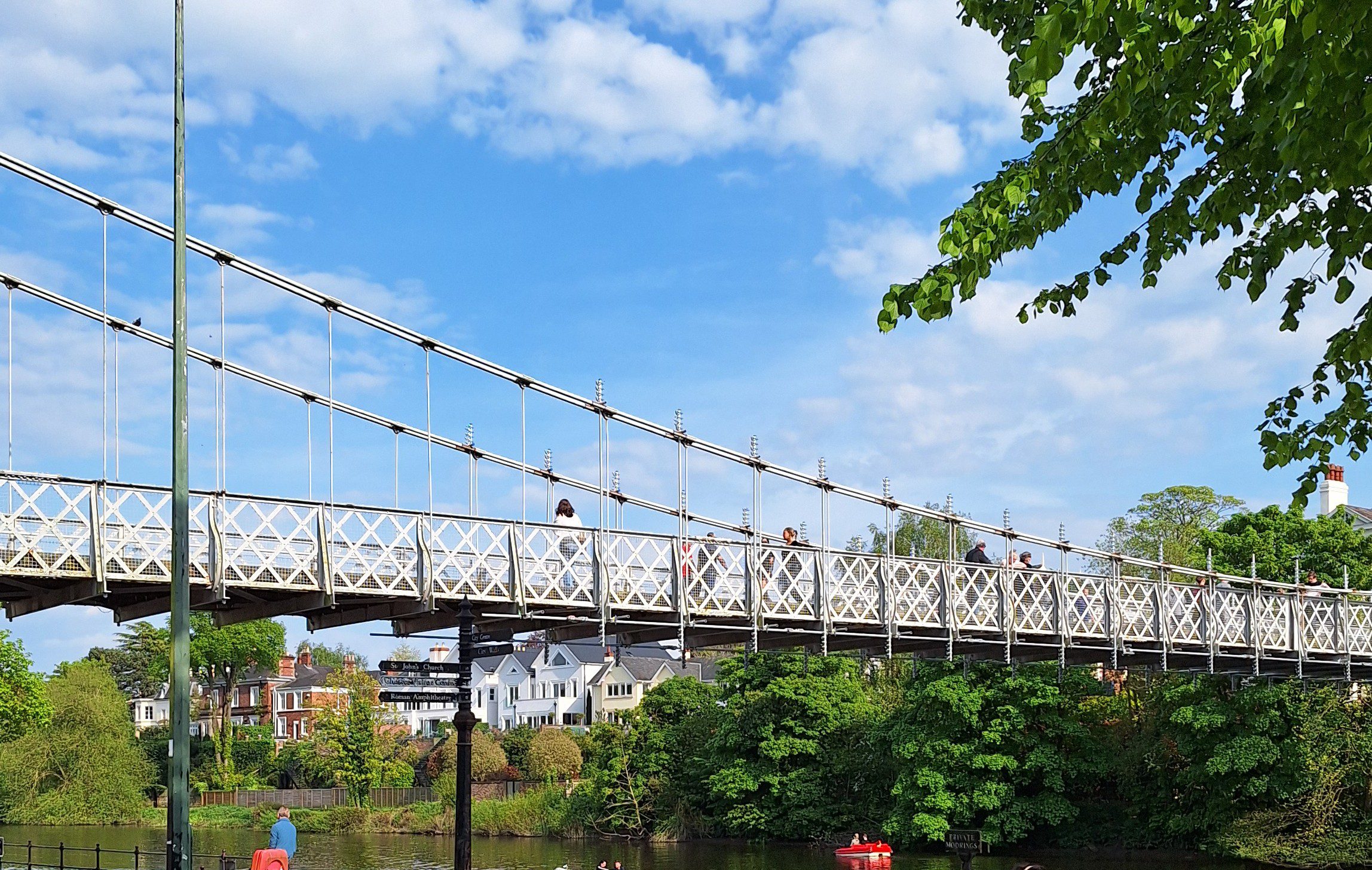
Chester is one of the most beautiful cities in the North West, in my humble opinion. It manages to combine two thousand years of history with its own brand of modern elegance. It is incredibly photogenic! I am always surprised by the ways this compact city embraces its legacy while innovating and improving. It must be disclosed that I am a University of Chester alumnus, so I have very fond memories of the city. However, that was at the tail-end of last century. My former rose-tinted perspective has had time to grow more objective. And guess what? It is very much worth a visit, as my companion ooh-ed and aah-ed her way through the city.
The Roman walls are the main draw. They are virtually intact, and are a magnet for tourists who want to experience the real history of the area. Below the walls, the medieval Rows offer a unique shopping experience within two-tiered galleries. These half-timbered buildings create a striking black and white aesthetic throughout the centre. From the ancient Roman Amphitheatre to the Victorian Eastgate Clock, the city offers a dense collection of heritage sites.
At A Glance
| Feature | Details |
| Origins | Roman Fortress ‘Deva Victrix’ (79 AD) |
| Key Landmark | The Eastgate Clock (second most photographed in U.K.) |
| Unique Feature | The Rows (two-tiered medieval shopping galleries) |
| History Hub | Chester Cathedral and Roman Amphitheatre |
| Postcode | CH1 |
Exploring the Roman Fortress of Deva Victrix
A walk around the city walls is the best way to see this history. These are the most complete Roman and medieval city walls in the UK. The circuit takes you on a journey through time, elevated above the modern(ish) streets. Many are still cobbled and this can be uncomfortable for those with accessibility needs.

On a sunny day, the walls offer a beautiful viewpoint over the city and the surrounding countryside.

You can see the Water Tower, which once sat right at the edge of the river before the water receded over the centuries. It now stands high and dry, a silent witness to how much the landscape has changed.
As a student, to earn some money, I had to dress up as a Roman centurion for a photo-shoot. In November, with a cold wind whistling up my tunic, I had no problem looking fierce, given my anger at the elements. It also enabled me to put ‘model’ on my disturbingly thin C.V., which was somewhat amusing.
The Roman Gardens offer a quiet space to see architectural fragments from the original fortress. You can view reconstructed sections of the legionary baths. It is a peaceful spot to sit and reflect on the engineering prowess of the Twentieth Legion.
Further along, the Roman Amphitheatre stands as a reminder of the scale of Roman Deva. It was once the largest of its kind in Britain, capable of holding thousands of spectators. Only half of the site has been excavated, with the other half still buried beneath modern buildings.
The Mystery of the Medieval Rows

Below the walls, the city centre is defined by the Rows. These are unique two-tiered shopping galleries that date back to the medieval period. No one is entirely sure why they were built this way. Some suggest they were constructed over the rubble of Roman buildings, while others think they were designed to keep shoppers away from the muddy streets below. Whatever the reason, they provide a sheltered and scenic way to explore the heart of the city. They also house a few pubs, which is rather lovely.
Walking along the upper level feels like stepping back into a different century. The timbered buildings are highly decorative and house a mix of independent boutiques and high street names. The architecture is a masterclass in Tudor and Victorian Gothic styles. It is easy to lose track of time wandering through the various levels and discovering hidden alleyways that lead to quiet courtyards.
Faith, Stones, and the Bridge of Sighs

The city centre is dominated by the majestic Chester Cathedral. This site has been a place of worship for over a thousand years. It began as a Benedictine Abbey and is famous for its intricate wood carvings and stunning stained glass.
The cathedral is a living history book, with architectural styles ranging from Norman to Perpendicular Gothic. The cloisters are particularly atmospheric, offering a glimpse into the monastic life that once thrived here.
The cathedral grounds offer a quiet escape from the bustle of Eastgate Street. You can walk through the Dean’s Field or sit in the refectory for a quiet moment. Nearby, you will find the Bridge of Sighs.

This small stone bridge sits between the former Northgate Prison and the Blue Coat School chapel. It was where condemned prisoners would go to receive their last rites before execution. It is a sombre reminder of the darker side of the city’s long history.
Such tales of hauntings and history are common here. Many local pubs claim to host ghosts from the English Civil War. The Pied Bull and the Old King’s Head are just two examples of establishments where the past feels very present. Whether you believe in the supernatural or not, the stories add a layer of intrigue to the winding streets. The city is dense with these small details that reward the observant visitor.
Life and Leisure by the River Dee
After exploring the heights of the walls, you should take a stroll down to the wide and fast-flowing River Dee. The area known as ‘The Groves’ is the perfect place to watch life go by.
This riverside promenade has been a popular leisure spot for centuries. You will find plenty of ice cream vendors and a charming bandstand that often hosts local musicians. It is the ideal place for a picnic or a slow walk under the trees.
You can take a sightseeing boat from here to see the grand riverside villas that line the banks. These boats offer a different perspective on the city and allow you to see areas that are not accessible on foot.
If you prefer to stay on land, the riverbank provides a flat and scenic path for a long walk. You can head towards the Old Dee Bridge, which has stood in some form since the Roman era. The bridge is a vital link between the city and the Handbridge area.
The sense of peace at the edge of the water can lull you into a blissful reverie. It is a stark contrast to the busy shopping streets just a few minutes away. On a summer afternoon, the river is alive with rowers and paddleboarders. It is a reminder that Chester is a city that knows how to enjoy its natural surroundings as much as its historical ones.
Victorian Elegance and the Eastgate Clock

No visit to Chester is complete without seeing the Eastgate Clock. It is said to be the second most photographed clock in the U.K. after Big Ben. Built to celebrate the Diamond Jubilee of Queen Victoria, it sits atop the Eastgate, which was once the main entrance to the Roman fortress. The clock is a masterpiece of wrought ironwork and bright colours. It serves as a perfect landmark for meeting friends or starting a tour of the walls.
From the bridge beneath the clock, you have one of the best views in the city. You can look down Eastgate Street towards the Cross, where the four main Roman roads meet. The view captures the layers of history that define Chester. You see Roman foundations, medieval galleries, and Victorian flourishes all in one frame. It is a popular spot for photographers and artists who want to capture the essence of the city.
Final Thoughts on a Chester Day Trip
Everywhere you turn in Chester, another piece of history awaits. The city centre is like something from a fairy tale, filled with character and surprise. It manages to feel both ancient and vibrant, a place where the past is not just preserved but used every day. As someone who studied for four years in Chester, I am obviously biased. However, on every return to the city, I am excited by the reactions of thrill and wonder from my companions.
The city is small enough to explore on foot but dense enough to require multiple visits. Whether you are interested in Roman military history, medieval architecture, or simply a good day of shopping, Chester delivers. It is a jewel of the North West that never fails to impress. Make sure to check local listings for events, as the city often hosts festivals and markets that add even more life to the historic streets.
The Visit Cheshire website has a lot of great information!
Chester, Cheshire, CH1
Fan of the Romans?
We’ve put together a specialist Roman Chester itinerary for those who want to see every ruin in the city.


