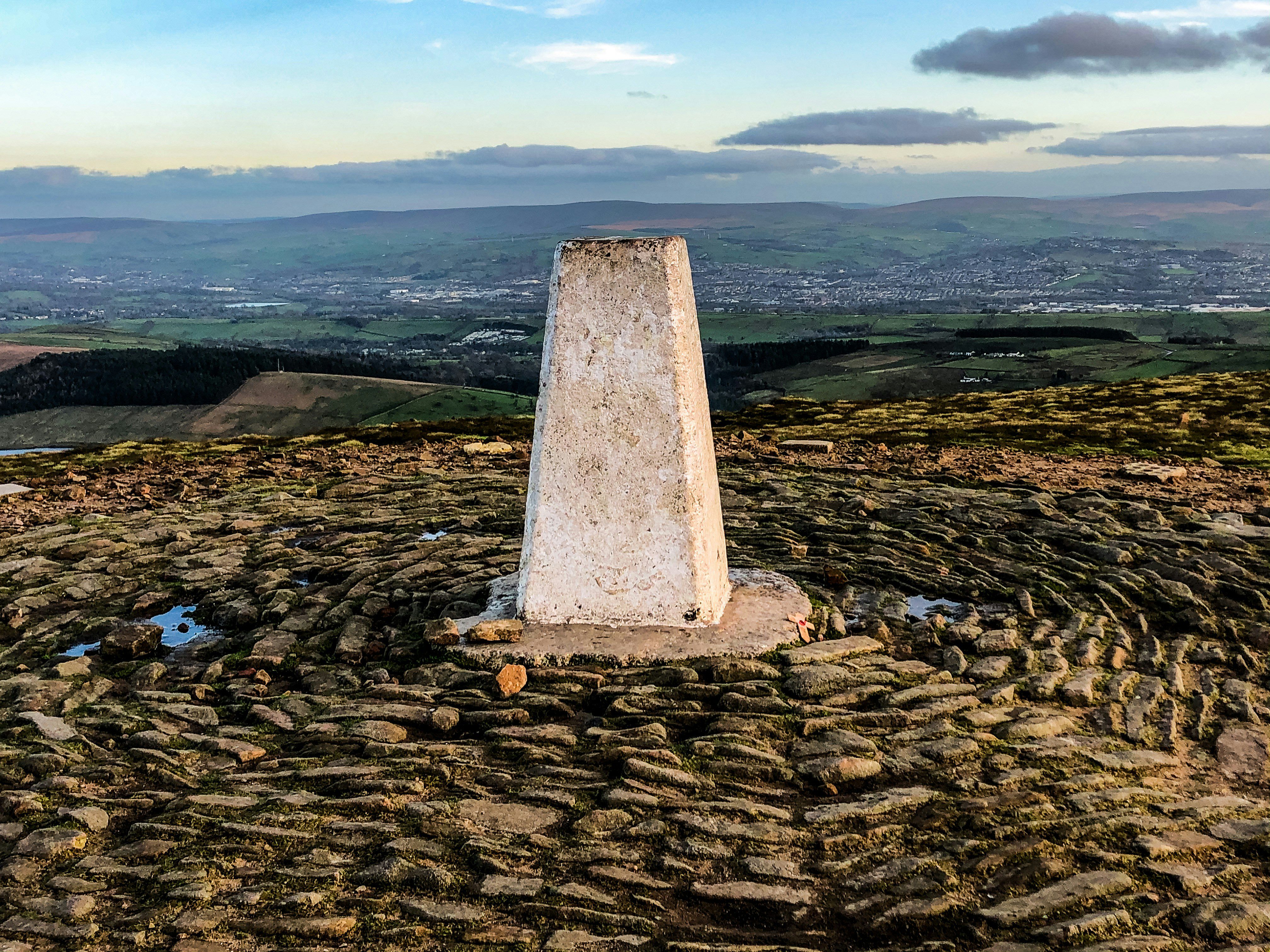
Pendle Hill stands as a silent, brooding sentinel over the Ribble Valley. Rising to a height of 557 metres, this landmark of the Lancashire landscape is more than a simple geographical feature. It is a place where history, landscape, and legend collide. For those who walk its slopes, they can not ignore the stark contrast between the sweeping, panoramic views of the North West and the dark, tangled weight of its reputation.
At A Glance
| Feature | Details |
| Location | Pendle Hill, Lancashire |
| Difficulty | Moderate |
| Best Time to Visit | Year-round, but clear days are essential for views |
| Key Interests | Pendle Witches history, Quaker history, scenic hiking |
| Starting Point | Barley village |
The Ascent of Pendle Hill
Approaching the summit of Pendle Hill requires a steady climb. The most common starting point is the village of Barley. From here, the path leads upwards, leaving the quiet stone cottages behind for the expansive, undulating moorland. As you climb, the terrain shifts from green fields to rougher, peat-stained grass and gritstone.
On a clear day, the summit offers an unparalleled vantage point. You can trace the path of the Ribble as it meanders towards the Irish Sea. To the west, the cooling towers of distant coastal towns loom, while to the north and east, the rolling folds of the Yorkshire Dales suggest the ruggedness of the terrain to come.

However, Pendle is notoriously fickle. A sudden mist can descend with little warning, turning the summit into a disorienting, featureless void. This rapid transformation is perhaps the primary reason why the hill has cultivated such a persistent reputation for the supernatural.
It is a place that feels ancient, indifferent to the humans who scramble over its spine. The physical exertion required to reach the top serves as a quiet meditation on the scale of the landscape (and the strength of your legs).
The Pendle Witches
It is impossible to discuss the hill without addressing the events of 1612. The trial of the Pendle Witches remains the most famous series of witch trials in English history. These events did not just happen in a vacuum; they were deeply rooted in the harsh social conditions of the 17th century.
The accusations centred on two families, the Demdikes and the Chattoxes, who lived in the shadow of the hill. In a time of extreme poverty and religious paranoia, these families were easily scapegoated. The trial, held at Lancaster Castle, saw people accused of maleficium, or causing harm through Latin witchcraft.

The testimonies given were often under duress or through the eyes of terrified children. They painted a picture of a sinister coven gathering on the slopes of the hill. History views these events through the lens of tragic injustice.
The legal system of the time was designed to extract confessions (he said euphemistically), and the fear of the unknown provided a ready-made narrative for the authorities. Walking the hill today, one cannot help but feel a sense of somber reflection on the lives lost to ignorance and malice.
The legacy of the 1612 trials is now a central part of the local identity, though it is one that manages to walk the line between macabre historical interest and respectful remembrance. Every stone wall and hidden track seems to carry the ghost of this historical trauma.
Beyond the Witches: Local Lore
While the 1612 trials dominate the discourse, Pendle Hill is a broader tapestry of folklore. The hill connects with the figure of George Fox, the founder of the Religious Society of Friends, or Quakers. They were known as Quakers because they were said to tremble before God. In 1652, Fox climbed the hill after experiencing a profound spiritual vision.

He claimed to have seen a great people to be gathered. This led to the establishment of the Quaker movement. For those interested in the history of non-conformity, the hill represents a site of immense spiritual significance that predates, yet ironically sits alongside, the darker tales of witchcraft.
There are also deeper, older layers of legend. Folklore suggests that the hill is the home of various spirits and entities. Tales of the Boggart, a mischievous or malevolent household spirit, were common in the surrounding hamlets.
The landscape itself, with its deep cloughs and hidden caves, provided the perfect setting for stories meant to keep children away from dangerous terrain. These myths served as a primitive, cautionary framework for navigating the wilder parts of the Lancashire countryside.
Beyond the spectres of the past, the hill is rich with the echoes of pastoral life, where the line between the natural and supernatural was once very thin.
After descending the hill, a short drive takes you to the unique sounds of the Singing Ringing Tree Near Burnley, another landmark that defines the rugged character of the Lancashire landscape.
The Modern Connection
Today, the appeal of Pendle Hill lies in its ability to reconcile its history with modern life. It remains a magnet for hikers, trail runners, and those seeking a connection to the brooding atmosphere of the Pennines.
The annual events often lean into the historical theme, transforming the hill into a site of spectacle. Yet, even during these busy times, the vastness of the landscape ensures that one can find solitude.
It does not offer easy answers about the ghosts of its past, nor does it provide a soft, welcoming environment for the unprepared visitor. The ascent is a journey through layers of time.
You start in the present, surrounded by the signs of modern outdoor recreation, and slowly ascend into a realm where the air feels thinner and the silence heavier.
This transition is what draws people back to the peak time and time again. It is a place that strips away the noise of contemporary existence (apart from your heart pounding) and leaves you with the raw elements of earth, sky, and memory.

The hill remains as it has always been; a stoic, weather-beaten formation that has watched generations pass by, holding its secrets close beneath the heather and the stone.
It is a testament to the endurance of history in the face of time, standing tall over a county that has been shaped, in no small part, by its enduring and haunting presence. It is a place that demands firsthand experience, a true icon of the North.


