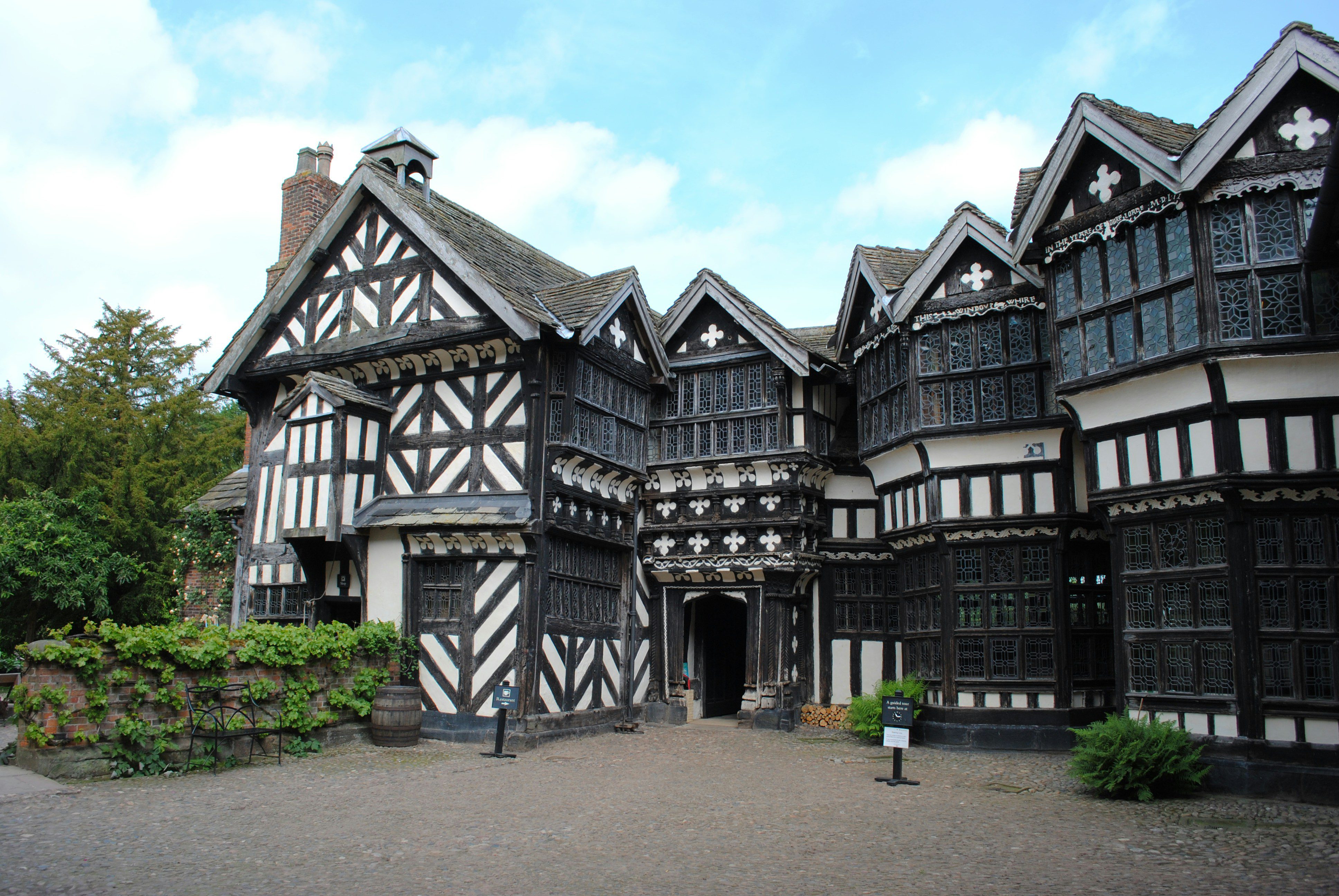
Little Moreton Hall is a building that defies the laws of physics and is well worth a visit. Located near Congleton in Cheshire, this moated manor house is the finest example of a timber-framed building in Britain. It is famous for its ‘wonky’ appearance. The upper floors seem to sag and lean over the moat, creating a silhouette that is instantly recognisable.
At A Glance: Little Moreton Hall
| Feature | Details |
| Location | Congleton, CW12 4SD |
| Primary Attraction | The Long Gallery & Knot Garden |
| Architectural Style | Tudor Timber-Framed |
| Managed By | National Trust |
| Parking | Free on-site parking for visitors |
| Accessibility | Ground floor accessible, upper floors via steep stairs |
A Tudor Statement of Wealth

The Moreton family built the hall over several generations but they did not intend it to be a castle or a fortress. It was a domestic statement of wealth and social standing.
The intricate black and white patterns are not just for show. They represent the high cost of timber and the skilled craftsmanship of the Tudor era.

The most impressive part of the hall is the Long Gallery. It was added as a final layer to the building. The weight of the glass and the heavy lead-mining materials caused the structure to buckle over time.
When you walk through the gallery today, the floor is visibly uneven. It feels like being on the deck of a ship at sea. This architectural quirk is what makes the hall so endearing to visitors.
The Knot Garden and Moat

The hall is surrounded by a perfectly square moat. In the Tudor period, this was more about prestige than protection. It reflects the building beautifully in the water, providing excellent opportunities for photography.
Behind the hall lies the Knot Garden. This is a meticulous recreation of a 16th-century garden. The box hedges are arranged in complex geometric patterns.
They represent the Tudor obsession with order and symmetry in nature. It is a quiet spot to sit and admire the rear of the building, which is just as detailed as the front.
Life Inside the Hall
Inside, the hall is remarkably well-preserved. You can see the original Tudor fireplaces and the intricate wood carvings in the Great Hall.
The National Trust manages the property and keeps the rooms sparsely furnished. This allows the architecture to speak for itself. You can see how the family lived, from the high-status dining areas to the cramped service quarters.
The ‘Little’ in the name is somewhat misleading. While it is smaller than some of the grand stone estates in Cheshire, it feels immense due to its height.
The verticality of the building was a bold choice for the time. It remains a testament to the ambition of the Moreton family.
Final Thoughts on Little Moreton Hall
Little Moreton Hall is more than just a historical curiosity. It is a physical record of the Moreton family’s social ambition and the limits of Tudor engineering.
The sight of the sagging Long Gallery reflected in the moat provides one of the most striking visual experiences in the North West.
Because the National Trust has chosen to keep the interior decorations minimal, the focus remains entirely on the extraordinary timber craftsmanship.
It is a site that rewards those who take the time to look at the details, from the ancient graffiti on the window glass to the precise geometric patterns of the black and white exterior.
If the crooked charm of Little Moreton Hall has you hooked on Tudor styling, the nearby town of Nantwich boasts an incredible collection of timber-framed buildings that survived the Great Fire of 1583.


